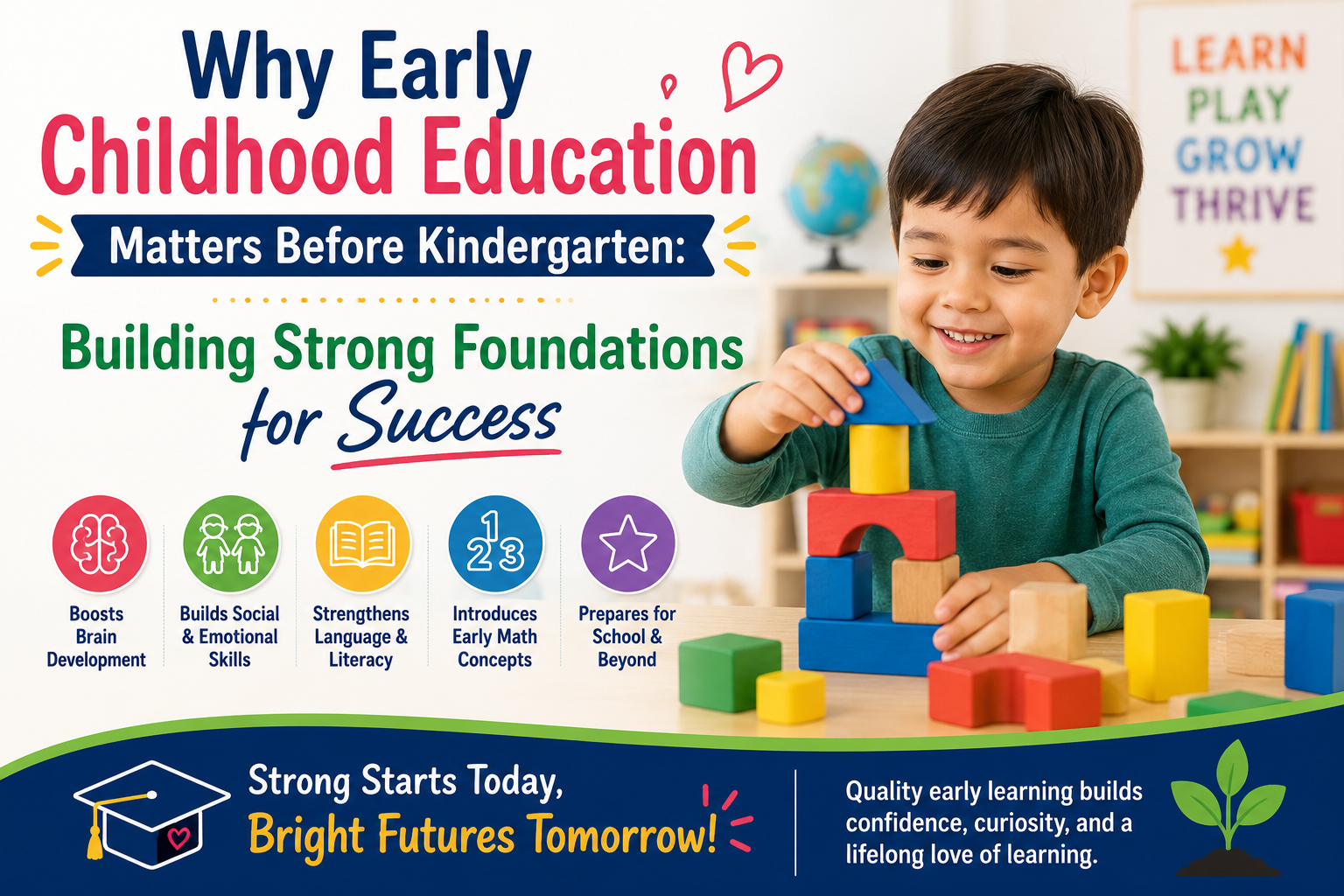
The years before kindergarten are some of the most important in a child’s life. During this time, children experience rapid growth in their cognitive, emotional, social, and physical development. These early years provide the foundation upon which future learning and success are built.
While many parents focus on preparing their child for elementary school, the journey toward academic achievement and personal growth begins long before kindergarten. Early childhood education plays a critical role in helping children develop the skills they need to thrive both in school and in life.
From learning how to communicate with others to developing problem-solving abilities and self-confidence, quality early childhood education programs provide children with valuable experiences that support lifelong success.
In this article, we’ll explore why early childhood education matters before kindergarten and how it helps children build strong foundations for future achievement.
What Is Early Childhood Education?
Early childhood education refers to structured learning experiences designed for children from infancy through preschool age.
These programs focus on nurturing a child’s overall development through age-appropriate activities that encourage learning, exploration, creativity, and social interaction.
Quality early childhood education programs typically include:
- Language and literacy development
- Early math concepts
- Science exploration
- Social-emotional learning
- Physical development activities
- Creative arts
- Problem-solving opportunities
Rather than focusing solely on academics, early childhood education supports the whole child by promoting growth in multiple developmental areas.
Why the Early Years Matter
Research consistently shows that the first five years of life are crucial for brain development.
During this period, children form millions of neural connections that influence how they think, learn, communicate, and interact with the world around them.
Experiences during these years help shape:
- Learning abilities
- Emotional regulation
- Social skills
- Memory
- Language development
- Problem-solving skills
Positive early learning experiences create strong foundations that can influence academic performance and personal success for years to come.
Building Kindergarten Readiness
One of the primary goals of early childhood education is helping children prepare for kindergarten.
Kindergarten readiness goes far beyond knowing letters and numbers. It involves developing a wide range of skills that enable children to succeed in a classroom environment.
These skills include:
Social Skills
Children learn how to:
- Share with others
- Take turns
- Follow directions
- Work in groups
- Resolve conflicts appropriately
Emotional Skills
Children develop:
- Self-confidence
- Emotional awareness
- Self-control
- Resilience
- Independence
Academic Skills
Children begin learning:
- Letter recognition
- Vocabulary development
- Counting
- Shapes and colors
- Basic problem-solving
A strong early childhood education program helps children enter kindergarten feeling prepared, confident, and excited to learn.
Supporting Language and Communication Development
Language development is one of the most important areas of growth during early childhood.
Children who participate in quality early learning programs are exposed to rich language experiences every day.
These may include:
- Storytelling
- Reading books
- Singing songs
- Group discussions
- Interactive conversations
Teachers intentionally introduce new vocabulary and encourage children to express their thoughts, ideas, and feelings.
Strong communication skills help children succeed academically and build healthy relationships throughout life.
Encouraging Social Development
For many children, early childhood education programs provide their first opportunities to regularly interact with peers outside the family.
These interactions help children learn valuable social skills such as:
- Cooperation
- Empathy
- Respect
- Teamwork
- Friendship building
Children learn how to navigate social situations, understand different perspectives, and communicate effectively with others.
These skills are essential not only for school success but also for future personal and professional relationships.
Developing Emotional Intelligence
Emotional intelligence refers to the ability to understand and manage emotions while recognizing the feelings of others.
Quality early childhood education programs help children:
- Identify emotions
- Express feelings appropriately
- Manage frustration
- Develop self-regulation
- Build empathy
Teachers guide children through everyday experiences that teach emotional awareness and healthy coping strategies.
Children with strong emotional skills often experience better academic outcomes and healthier social relationships.
Promoting Independence and Confidence
One of the greatest benefits of early childhood education is the development of independence.
Children are encouraged to:
- Make choices
- Follow routines
- Complete tasks independently
- Solve simple problems
- Take responsibility for their belongings
As children accomplish new tasks, they gain confidence in their abilities.
This confidence encourages a positive attitude toward learning and helps children approach new challenges with enthusiasm rather than fear.
Creating a Love for Learning
The best early childhood education programs foster curiosity and excitement about learning.
Young children are naturally curious about the world around them. Effective educators build on this curiosity by creating engaging, hands-on learning experiences.
Activities may include:
- Science experiments
- Art projects
- Music and movement
- Storytime
- Nature exploration
When learning is fun and meaningful, children develop positive attitudes toward education that can last a lifetime.
Strengthening Cognitive Development
Cognitive development involves the growth of thinking, reasoning, memory, and problem-solving skills.
Early childhood education programs provide opportunities for children to:
- Explore new concepts
- Ask questions
- Solve puzzles
- Participate in discussions
- Experiment with ideas
These activities stimulate brain development and encourage critical thinking.
Children learn how to process information, make decisions, and understand cause-and-effect relationships.
Supporting Early Literacy Skills
Literacy development begins long before children learn to read independently.
Quality preschool programs introduce foundational literacy skills through activities such as:
- Reading aloud
- Letter recognition
- Rhyming games
- Storytelling
- Vocabulary building
Children who develop strong early literacy skills are often better prepared for reading instruction in kindergarten and elementary school.
Early exposure to books also helps foster a lifelong love of reading.
Introducing Early Math Concepts
Mathematical thinking begins during the preschool years.
Children naturally encounter math concepts through everyday activities such as:
- Counting objects
- Sorting items
- Identifying patterns
- Comparing sizes
- Measuring quantities
Early childhood education programs intentionally incorporate these experiences into daily learning.
Developing early math skills helps children build confidence and prepares them for future academic success.
Enhancing Physical Development
Physical development is another important component of early childhood education.
Children participate in activities that strengthen both gross and fine motor skills.
Gross Motor Development
Activities may include:
- Running
- Jumping
- Climbing
- Dancing
- Outdoor play
Fine Motor Development
Activities often involve:
- Drawing
- Coloring
- Cutting
- Building blocks
- Manipulating small objects
These skills support overall health and prepare children for classroom tasks such as writing and using school materials.
Learning Through Play
Play is one of the most effective ways young children learn.
Research shows that play-based learning supports:
- Creativity
- Problem-solving
- Language development
- Social interaction
- Cognitive growth
Quality early childhood education programs intentionally incorporate play into the learning process.
Through play, children explore ideas, experiment with solutions, and develop important life skills while having fun.
Reducing Future Learning Gaps
Children enter kindergarten with varying levels of readiness and experience.
Early childhood education helps create more equal learning opportunities by providing children with foundational skills before they begin formal schooling.
Quality programs can help reduce learning gaps related to:
- Language development
- Literacy skills
- Social-emotional growth
- Cognitive abilities
By giving children a strong start, early education increases the likelihood of long-term academic success.
Building Positive Relationships with Teachers
Supportive relationships with caring adults contribute significantly to a child’s development.
Early childhood educators serve as mentors, role models, and guides who help children:
- Feel secure
- Build confidence
- Develop trust
- Explore new ideas
Positive teacher-child relationships create a nurturing environment where children feel comfortable taking risks and trying new things.
Long-Term Benefits of Early Childhood Education
The advantages of early childhood education extend far beyond kindergarten.
Research suggests that children who participate in quality early learning programs are more likely to:
- Perform better academically
- Graduate from high school
- Attend college
- Develop strong social skills
- Maintain positive behaviors
- Achieve career success
These long-term benefits demonstrate the lasting impact that early education can have on a child’s future.
How Parents Can Support Early Learning at Home
Parents play a vital role in reinforcing early learning experiences.
Simple activities can support development, including:
- Reading together daily
- Encouraging conversation
- Playing educational games
- Exploring nature
- Practicing counting and sorting
- Creating opportunities for creative play
When parents and educators work together, children receive consistent support that strengthens learning and development.
Conclusion
Early childhood education is far more than preparation for kindergarten—it’s an investment in a child’s future. The skills children develop during these formative years influence their academic achievement, emotional well-being, social relationships, and lifelong success.
Through engaging learning experiences, supportive teacher relationships, and opportunities for exploration and growth, quality early childhood education programs help children build the confidence and abilities they need to thrive.
For parents, choosing an early learning program is one of the most valuable decisions they can make. By providing children with strong educational foundations before kindergarten, families help set the stage for a lifetime of learning, achievement, and success.
The journey toward future success begins long before a child enters elementary school. Early childhood education provides the building blocks that allow children to reach their full potential and develop into confident, capable learners.