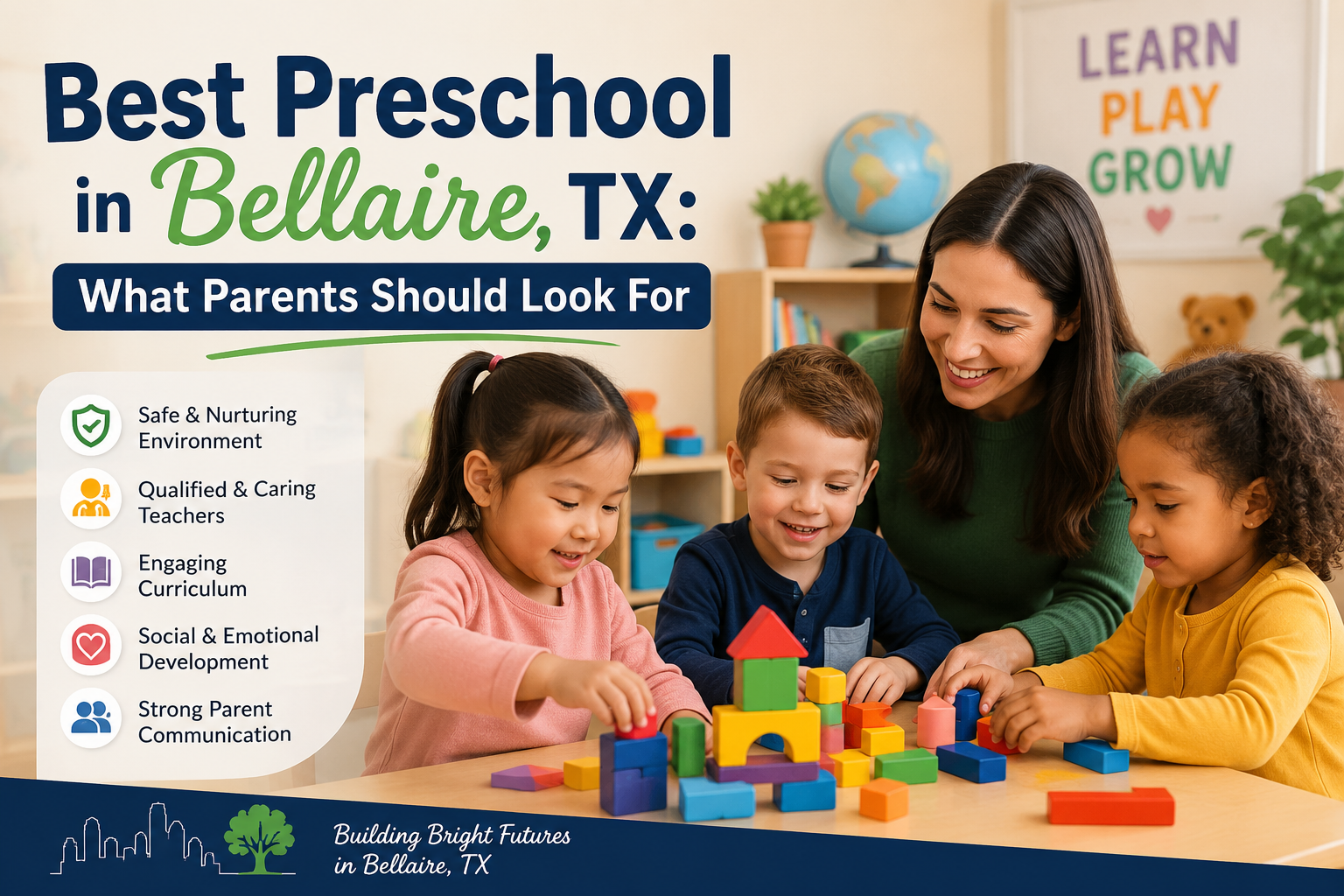
Choosing the right preschool is one of the most important decisions you’ll make as a parent. The early years of a child’s life are filled with rapid growth, curiosity, and learning, making it essential to select a preschool that provides a safe, nurturing, and stimulating environment.
If you’re searching for the best preschool in Bellaire, TX, you’ll quickly discover that there are many options available. While every school may promise quality care and education, not all programs provide the same level of learning, safety, and support.
This guide will help you understand the key factors to consider when choosing a preschool so you can make the best decision for your child’s future.
Why Preschool Matters
Preschool is much more than childcare. It lays the foundation for a child’s academic, emotional, and social development.
Children who attend quality preschool programs often develop:
- Strong communication skills
- Better social interactions
- Emotional confidence
- Early literacy and math skills
- Problem-solving abilities
- Independence and responsibility
Research consistently shows that children who receive quality early childhood education are better prepared for kindergarten and future academic success.
A Safe and Secure Learning Environment
Safety should always be your first priority.
A quality preschool should maintain high standards of health and safety, including:
- Secure entrances and exits
- Regular cleaning and sanitization
- Childproof classrooms
- Emergency preparedness plans
- CPR and First Aid-trained staff
- Supervised indoor and outdoor play areas
Parents should also ask about visitor policies, emergency drills, and classroom supervision.
When touring a preschool in Bellaire, pay attention to whether children appear happy, engaged, and well supervised.
Qualified and Caring Teachers
Teachers have the greatest influence on your child’s preschool experience.
Look for educators who:
- Have training in early childhood education
- Continue professional development
- Create engaging learning activities
- Communicate openly with parents
- Show patience and kindness
- Encourage curiosity and creativity
Great teachers understand that every child learns differently and adapt their teaching methods to meet individual needs.
Age-Appropriate Curriculum
The best preschool programs balance structured learning with creative play.
Rather than focusing solely on worksheets or memorization, children should participate in activities that encourage exploration and discovery.
A well-rounded curriculum often includes:
- Language and literacy
- Early mathematics
- Science exploration
- Music and movement
- Arts and crafts
- Sensory activities
- Outdoor play
- Social-emotional learning
These experiences help children develop essential skills while keeping learning enjoyable.
Learning Through Play
Play is one of the most effective ways young children learn.
Play-based education allows children to:
- Build imagination
- Solve problems independently
- Develop communication skills
- Learn teamwork
- Practice decision-making
- Improve concentration
Instead of simply sitting at desks, children learn by experimenting, building, pretending, and interacting with others.
This type of learning promotes long-term academic success while supporting healthy emotional development.
Small Class Sizes Make a Difference
Lower student-to-teacher ratios allow educators to give each child more individualized attention.
Smaller classes typically result in:
- Better supervision
- Personalized instruction
- Stronger teacher-child relationships
- Faster identification of learning needs
- Improved classroom behavior
Ask about classroom sizes and teacher-to-child ratios during your visit.
Clean and Organized Classrooms
The learning environment should be inviting, organized, and designed for children.
Quality classrooms usually include:
- Reading corners
- Learning centers
- Educational toys
- Age-appropriate books
- Art supplies
- Hands-on learning materials
Clean classrooms also help reduce the spread of illness while creating a healthier environment for children.
Strong Communication with Parents
A preschool should work as a partner with families.
Look for schools that provide:
- Daily updates
- Parent-teacher conferences
- Progress reports
- Photos and classroom activities
- Open communication channels
When parents stay informed about their child’s development, they can reinforce learning at home and address concerns early.
Social and Emotional Development
Academic readiness is important, but emotional growth is equally valuable.
A quality preschool teaches children how to:
- Share with others
- Express emotions appropriately
- Build friendships
- Resolve conflicts peacefully
- Follow routines
- Practice kindness and respect
These skills prepare children for kindergarten and everyday life.
Outdoor Play and Physical Activity
Young children need opportunities to move, explore, and develop gross motor skills.
Look for schools that offer:
- Safe playground equipment
- Outdoor learning activities
- Daily recess
- Physical games
- Structured movement activities
Regular physical activity supports both physical health and brain development.
Flexible Programs for Busy Families
Many families need childcare options that fit their work schedules.
Consider whether the preschool offers:
- Full-day programs
- Half-day programs
- Before-school care
- After-school care
- Flexible enrollment options
Convenient scheduling can make balancing work and family responsibilities much easier.
Positive Reviews and Community Reputation
One of the best ways to evaluate a preschool is by listening to other parents.
Read online reviews and ask friends or neighbors about their experiences.
Look for consistent feedback regarding:
- Friendly staff
- Clean facilities
- Educational quality
- Teacher communication
- Child happiness
- Safety practices
A preschool with a strong reputation in the Bellaire community often reflects years of dedicated service.
Schedule a Personal Tour
No website or brochure can replace visiting a preschool in person.
During your tour, observe:
- How teachers interact with children
- Classroom organization
- Children’s engagement
- Safety procedures
- Learning materials
- Overall atmosphere
Don’t hesitate to ask questions about curriculum, discipline policies, teacher qualifications, and daily schedules.
The right preschool should make you feel confident that your child will be safe, happy, and encouraged to learn every day.
Questions to Ask Before Enrolling
To help compare your options, ask these important questions:
- What educational philosophy does the school follow?
- What are the teacher qualifications?
- What is the student-to-teacher ratio?
- How do you communicate with parents?
- What safety procedures are in place?
- How is discipline handled?
- What does a typical daily schedule look like?
- How do you prepare children for kindergarten?
- What enrichment activities are available?
- Is healthy nutrition provided?
The answers can help you determine whether the preschool aligns with your family’s values and expectations.
Why Families Choose a Quality Preschool in Bellaire
Bellaire is home to many families who value education, safety, and community. A high-quality preschool supports these priorities by providing children with opportunities to learn, grow, and build confidence before entering elementary school.
The best preschools combine experienced teachers, engaging learning experiences, safe facilities, and strong partnerships with parents. When these elements come together, children are more likely to develop the skills they need for lifelong success.
Final Thoughts
Finding the best preschool in Bellaire, TX requires more than comparing tuition or location. Take the time to visit schools, ask thoughtful questions, and observe how teachers interact with children.
A quality preschool should provide a safe environment, experienced educators, engaging learning opportunities, and meaningful communication with families. Most importantly, it should be a place where your child feels supported, valued, and excited to learn.
By choosing a preschool that nurtures both academic and personal growth, you’re making an investment in your child’s future that can have lasting benefits for years to come.