Choosing a childcare center is one of the most important decisions parents make during their child’s early years. The right childcare program provides more than supervision—it creates a safe, nurturing environment where children learn, grow, develop social skills, and prepare for future academic success.
For families in Bellaire, TX, there are many childcare options available, making the decision feel overwhelming. Every center may claim to offer quality care, but how do you know which one is truly the best fit for your child?
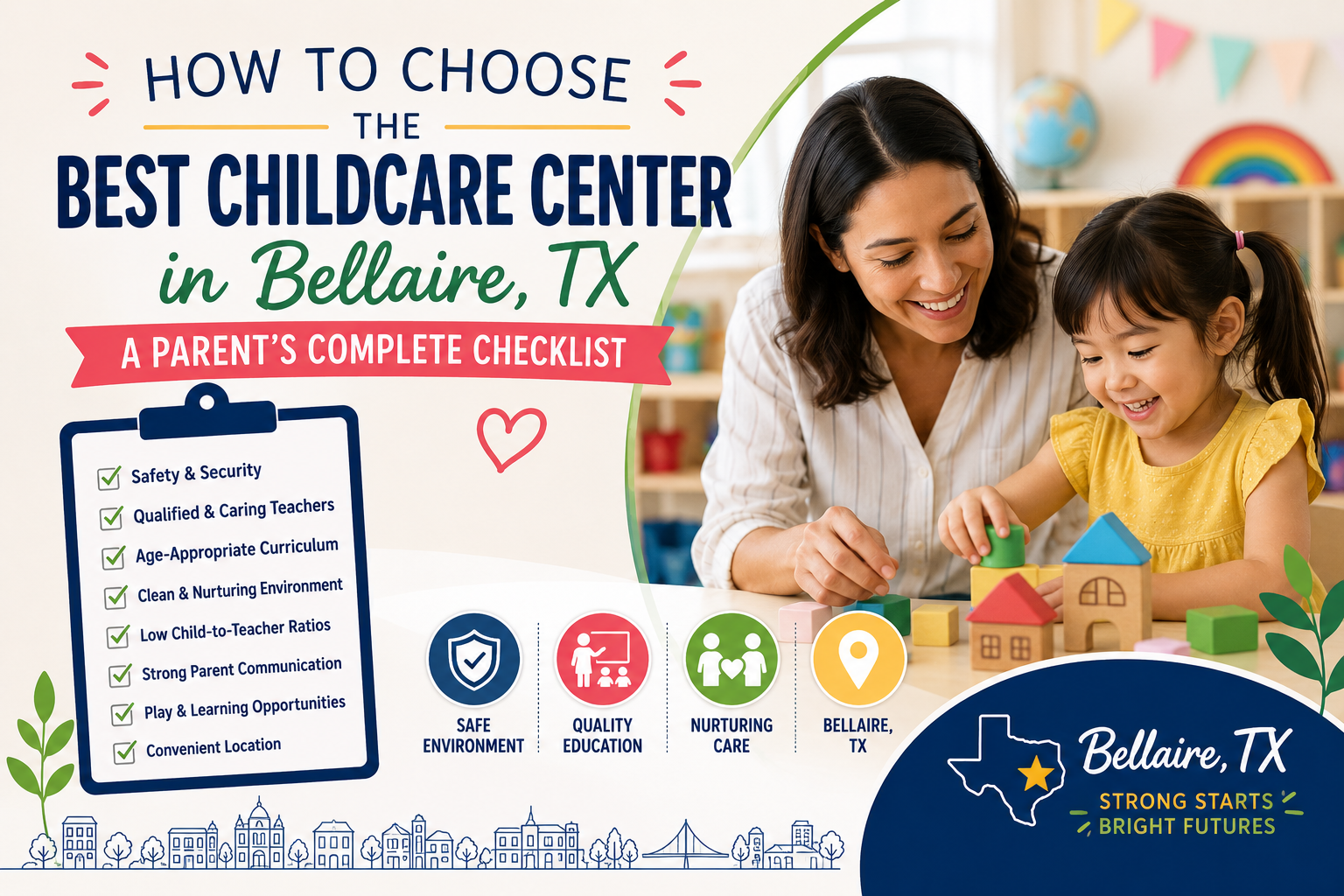
To help simplify your search, we’ve created a complete childcare center checklist that parents can use when evaluating daycare and preschool programs in Bellaire.
Why Choosing the Right Childcare Center Matters
A child’s first years are critical for brain development and learning. Research shows that high-quality early childhood education can positively influence language development, social skills, emotional growth, and school readiness.
The childcare center you choose will play a significant role in your child’s daily life, helping shape their experiences, confidence, and love for learning.
That’s why it’s important to look beyond convenience and cost and carefully evaluate the overall quality of care and education provided.
1. Check Licensing and Accreditation
Your first step should always be verifying that the childcare center is properly licensed by the State of Texas.
Licensing ensures that a facility meets required standards for:
- Health and safety
- Staff qualifications
- Child-to-teacher ratios
- Building requirements
- Emergency preparedness
In addition to licensing, look for quality indicators such as:
- Texas Rising Star Certification
- National accreditation
- Professional childcare memberships
These credentials demonstrate a commitment to exceeding minimum standards and providing high-quality early childhood education.
2. Evaluate Safety and Security Measures
Safety should always be a top priority.
When visiting a childcare center in Bellaire, pay close attention to security procedures and facility maintenance.
Ask questions such as:
- How are visitors screened?
- Are doors secured during operating hours?
- What are the pickup and drop-off procedures?
- Are emergency drills conducted regularly?
- Is the playground properly fenced?
Observe whether classrooms are clean, organized, and free from obvious hazards.
A quality childcare center should have clear policies designed to keep children safe at all times.
3. Review Teacher Qualifications and Experience
Teachers have a direct impact on your child’s learning and development.
Ask about:
- Educational backgrounds
- Childcare certifications
- CPR and First Aid training
- Ongoing professional development
- Years of experience
Highly trained educators understand child development and know how to create engaging learning experiences that support growth across multiple developmental areas.
Warm, caring, and knowledgeable teachers often make the biggest difference in a child’s childcare experience.
4. Observe Teacher-Child Interactions
While qualifications are important, observing teacher interactions is equally valuable.
During your visit, watch how teachers communicate with children.
Look for educators who:
- Speak respectfully
- Encourage participation
- Show patience
- Listen actively
- Offer praise and guidance
Positive teacher-child relationships help children feel secure, valued, and confident.
Children thrive when they are supported by caring adults who genuinely enjoy working with them.
5. Examine the Curriculum
A strong curriculum helps children build essential academic and developmental skills.
Ask childcare providers about their educational approach and daily learning activities.
Quality programs typically include:
- Early literacy development
- Language enrichment
- Math readiness
- Science exploration
- Creative arts
- Music and movement
- Social-emotional learning
The best childcare centers balance structured learning with play-based experiences that allow children to explore and discover.
6. Consider Age-Appropriate Learning Activities
Children learn differently at each developmental stage.
The activities offered should be tailored to the age and abilities of the children enrolled.
For example:
Infants
- Sensory exploration
- Language exposure
- Tummy time
- Fine motor development
Toddlers
- Social interaction
- Problem-solving activities
- Early language development
- Creative play
Preschoolers
- Kindergarten readiness skills
- Early reading activities
- Number concepts
- Group learning experiences
Age-appropriate programming helps children stay engaged and supports healthy development.
7. Ask About Child-to-Teacher Ratios
Smaller group sizes allow teachers to provide more individualized attention.
Low child-to-teacher ratios often result in:
- Better supervision
- Stronger relationships
- Increased learning opportunities
- Faster identification of developmental needs
Ask the center how many children are assigned to each classroom and how many teachers are present throughout the day.
Children benefit greatly when educators can spend quality time supporting their individual needs.
8. Evaluate Cleanliness and Health Practices
A clean environment is essential for children’s health and safety.
During your visit, observe:
- Classroom cleanliness
- Restroom sanitation
- Toy cleaning procedures
- Handwashing routines
- Food preparation practices
Ask about illness policies and how the center helps prevent the spread of germs.
Strong health and sanitation practices contribute to a healthier learning environment for all children.
9. Review Daily Schedules and Routines
Children thrive on consistency and routine.
Ask to see a typical daily schedule.
A balanced schedule should include:
- Learning activities
- Outdoor play
- Meals and snacks
- Rest periods
- Creative activities
- Social interaction
Predictable routines help children feel secure and support positive behavior throughout the day.
10. Explore Outdoor Play Opportunities
Physical activity is an important part of childhood development.
Outdoor play supports:
- Gross motor skills
- Coordination
- Physical fitness
- Social development
- Creativity
Look for playgrounds that are:
- Safe and well-maintained
- Age-appropriate
- Properly supervised
Children need opportunities to move, explore, and engage in active play every day.
11. Assess Communication with Parents
Strong communication between parents and teachers is essential.
Ask how the center keeps families informed about their child’s progress and daily experiences.
Many quality childcare centers provide:
- Daily reports
- Parent conferences
- Progress updates
- Mobile communication apps
- Newsletters
Open communication helps parents stay involved in their child’s learning journey and build stronger partnerships with educators.
12. Understand Discipline and Behavior Policies
Every childcare center should have clear behavior management practices.
Effective programs focus on:
- Positive reinforcement
- Redirection
- Teaching appropriate behaviors
- Emotional support
Avoid centers that rely heavily on punitive measures.
The goal should be helping children develop self-control, empathy, and problem-solving skills.
13. Consider the Learning Environment
The classroom environment can tell you a lot about the quality of a childcare center.
Look for spaces that are:
- Bright and welcoming
- Organized
- Child-friendly
- Engaging
- Filled with educational materials
Children should have access to books, puzzles, art supplies, building materials, and learning centers that encourage exploration and creativity.
14. Read Parent Reviews and Testimonials
Parent reviews can provide valuable insight into a childcare center’s reputation.
Look for feedback regarding:
- Teacher quality
- Communication
- Safety
- Cleanliness
- Educational programs
- Overall satisfaction
While no center is perfect, consistently positive reviews often indicate a strong commitment to quality care and customer service.
15. Trust Your Instincts
After researching, touring facilities, and asking questions, trust your instincts as a parent.
Ask yourself:
- Did the children appear happy?
- Were teachers engaged and attentive?
- Did the environment feel welcoming?
- Can I picture my child thriving here?
Your comfort level matters. The right childcare center should give you confidence and peace of mind.
Questions to Ask During a Childcare Tour
Bring this checklist when visiting childcare centers in Bellaire:
✔ Is the center licensed?
✔ Are teachers trained and qualified?
✔ What curriculum is used?
✔ What are the child-to-teacher ratios?
✔ How is safety maintained?
✔ What communication methods are used?
✔ How are behavioral challenges handled?
✔ How often are classrooms cleaned?
✔ What opportunities exist for outdoor play?
✔ How are families involved?
These questions can help you compare programs and make an informed decision.
Final Thoughts
Finding the best childcare center in Bellaire, TX requires careful research and thoughtful evaluation. By focusing on safety, educational quality, teacher qualifications, communication, and overall environment, parents can choose a program that supports their child’s growth and development.
Remember that the ideal childcare center is one that aligns with your family’s values while providing a safe, nurturing, and stimulating environment for your child.
Taking the time to use this checklist can help ensure your child receives the strong foundation they need for lifelong learning and success. The right childcare experience today can make a lasting difference in your child’s future.