
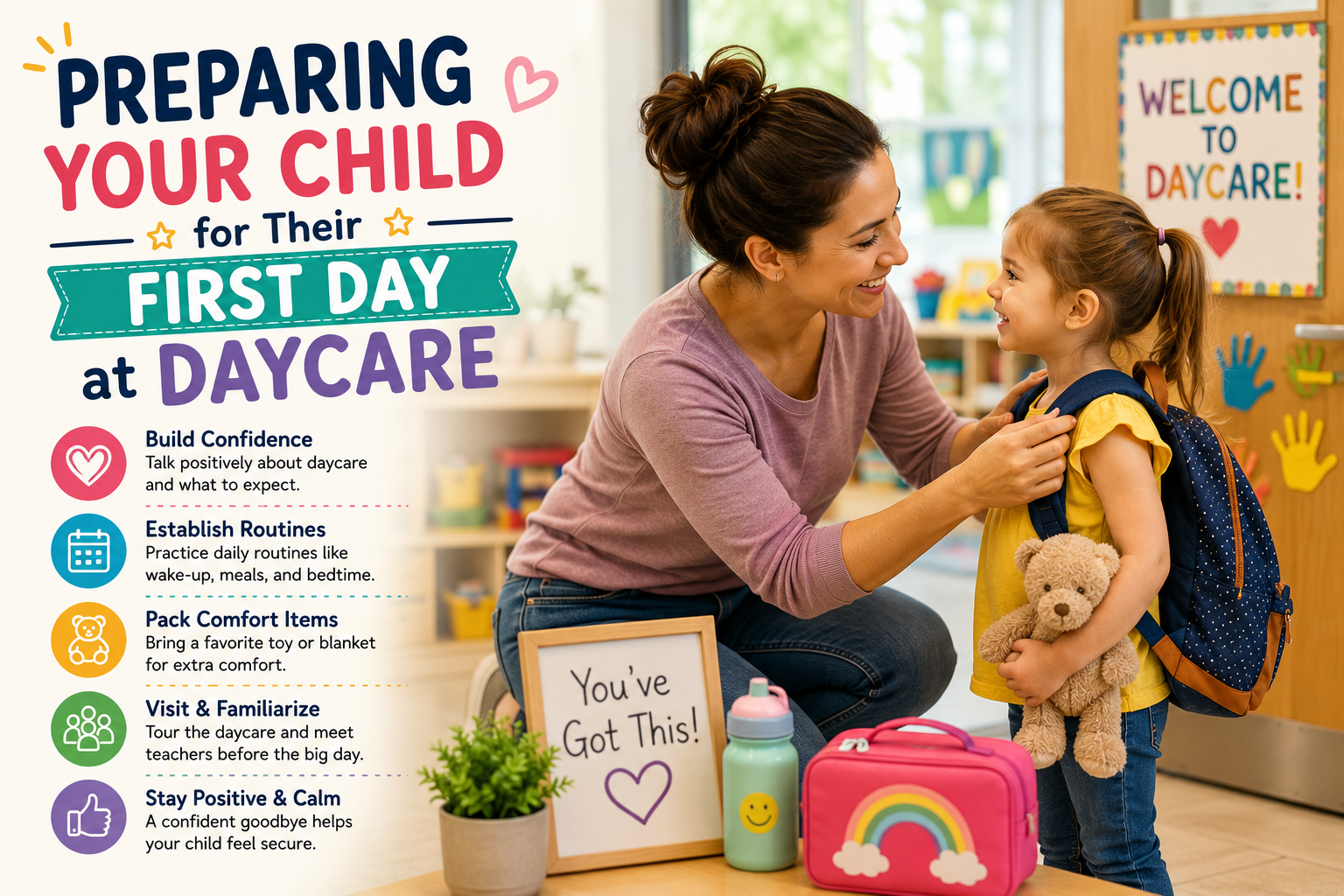
Starting daycare is a major milestone for both children and parents. For many families, it may be the first time a child spends several hours away from home in a new environment. While the experience brings exciting opportunities for learning, friendship, and growth, it can also create feelings of nervousness and uncertainty.
Children may wonder what daycare will be like, who they will meet, and whether their parents will return later in the day. Parents often experience their own emotions as well, including excitement, concern, and even anxiety. Fortunately, preparing your child before the first day can make the transition smoother and help create a positive experience.
With thoughtful preparation and encouragement, parents can help children feel more comfortable and confident as they begin their daycare journey.
Talk About Daycare Before the First Day
Children often feel more comfortable with new experiences when they understand what to expect. Begin talking about daycare several days or weeks before your child starts attending.
Use simple and positive language when explaining daycare.
You can discuss things such as:
- Meeting new friends
- Playing with toys
- Reading stories
- Singing songs
- Learning new things
- Enjoying fun activities
Avoid creating fear or uncertainty by focusing on positive experiences and opportunities.
For example, instead of saying:
“You have to go to daycare while I work.”
Try saying:
“You’re going to a place where you’ll have fun, play, and meet new friends.”
Positive conversations can help children develop excitement about the upcoming change.
Visit the Daycare Center Before Starting
If possible, arrange a visit before the official first day.
Allowing children to see the environment ahead of time helps them become familiar with:
- Classrooms
- Toys
- Play areas
- Teachers
- Daily routines
Many daycare centers encourage parents and children to participate in orientation visits or short introductory sessions.
During visits, children can explore and ask questions.
Even a brief visit may reduce fear because the environment becomes less unfamiliar.
Introduce Daily Routines Early
Children generally feel safer when they know what to expect. Establishing routines before daycare begins can help make the transition easier.
Try adjusting schedules for:
- Wake-up time
- Meal times
- Nap schedules
- Bedtime routines
If daycare starts at a specific time each morning, begin following a similar routine several days in advance.
Gradual changes can help children adapt without feeling overwhelmed.
Consistent routines also support better sleep habits, which can improve mood and behavior during the adjustment period.
Read Books About Starting Daycare
Children often connect with stories that reflect their experiences.
Books about starting daycare can help children:
- Understand emotions
- Learn what to expect
- Feel less alone
- Develop excitement
Stories often show children meeting teachers, making friends, and enjoying activities.
Reading together also creates opportunities to discuss feelings and answer questions.
Ask simple questions such as:
- “How do you think the child feels?”
- “What do you think will happen next?”
- “What activities would you like to do?”
These conversations help children process emotions in a comfortable way.
Encourage Independence Skills
Developing simple self-help skills can increase confidence before daycare begins.
Depending on age, children can practice:
- Washing hands
- Putting on shoes
- Using utensils
- Cleaning up toys
- Drinking from cups
- Following simple instructions
Children who can complete small tasks independently often feel more capable in new environments.
Encouragement and praise can help strengthen confidence.
Remember that independence develops gradually, so avoid expecting perfection.
Create Excitement Around the Experience
Children often respond to the emotions and attitudes of parents.
Creating excitement can help children see daycare as a positive experience rather than something to fear.
You might:
- Let them choose a backpack
- Pick a lunchbox together
- Select favorite clothes
- Choose a comfort item
Small choices help children feel involved and give them a sense of control.
Talking about fun activities they may experience can also build enthusiasm.
Prepare Comfort Items if Allowed
Many children find comfort in familiar objects during times of change.
Some daycare centers allow children to bring:
- Small blankets
- Favorite stuffed animals
- Family photos
- Comfort toys
Having a familiar item nearby can help children feel secure during the adjustment period.
Before bringing items, check with the daycare regarding their policies.
Comfort items often provide emotional support, especially during the first few days.
Practice Short Separations
If your child has never spent time away from you, practicing brief separations beforehand can help.
You may leave your child with:
- Trusted family members
- Grandparents
- Friends
- Babysitters
Start with short periods and gradually increase the time.
Children learn that parents leave and return, which helps build trust and reduce separation anxiety.
These experiences can make the daycare transition feel less overwhelming.
Keep Goodbyes Short and Positive
The first daycare drop-off can be emotional for both parents and children.
Although parents naturally want to comfort their children, long emotional goodbyes can sometimes increase anxiety.
Instead:
- Stay calm
- Offer hugs
- Say goodbye clearly
- Reassure your child that you will return
For example:
“Have fun today. I’ll see you after your activities.”
Avoid sneaking away without saying goodbye because this may create confusion or trust issues.
Children often adjust more quickly when goodbyes are consistent and positive.
Expect Some Emotional Reactions
Even with preparation, some children may cry or feel nervous during the first few days.
This reaction is completely normal.
Children may experience:
- Separation anxiety
- Shyness
- Uncertainty
- Mood changes
Adjustment periods vary from child to child.
Some children adapt quickly, while others need more time.
Parents should remain patient and supportive throughout the process.
Teachers and caregivers are experienced in helping children feel comfortable and engaged.
Communicate With Teachers
Building a positive relationship with daycare staff can support your child’s adjustment.
Share helpful information about your child, including:
- Favorite activities
- Food preferences
- Nap routines
- Comfort methods
- Personality traits
Teachers can use this information to create a more comfortable experience.
Regular communication also allows parents to stay informed about progress and daily experiences.
Celebrate Small Successes
Adjusting to daycare is a process, and every positive step matters.
Celebrate small achievements such as:
- Completing the first day
- Making a new friend
- Participating in activities
- Following routines
Positive encouragement helps children feel proud of their progress.
Simple praise such as:
“You did a great job today.”
can build confidence and motivation.
Final Thoughts
Preparing your child for their first day at daycare involves more than packing supplies and filling out forms. Emotional preparation, positive communication, and gradual transitions can make a significant difference in how children experience this important milestone.
Daycare introduces children to new friendships, learning opportunities, and experiences that support growth and development. While the first few days may feel challenging, patience and encouragement can help children adjust successfully.