The early years of a child’s life play an important role in shaping their future behavior, communication abilities, and relationships. While parents provide the first lessons in social interaction, children continue building these skills through experiences outside the home. One of the most valuable environments for social development is childcare.
Many parents initially view childcare as a solution for supervision while they work or manage daily responsibilities. However, quality childcare programs provide much more than a safe place for children during the day. They create opportunities for children to learn how to communicate, cooperate, build friendships, and understand emotions.
Social skills developed during childhood often influence how children interact throughout school and later in life. Understanding how childcare supports social growth can help parents appreciate the long-term benefits of quality early childhood education.
Why Social Skills Matter in Early Childhood
Social skills are the abilities children use to interact with others and develop healthy relationships. These skills help children communicate effectively, understand emotions, and function comfortably in different environments.
Strong social skills can help children:
- Build friendships
- Communicate thoughts and feelings
- Work well with others
- Solve conflicts peacefully
- Develop confidence
- Show empathy
- Adapt to new situations
Children who develop these abilities early often find it easier to adjust to school and social environments as they grow older.
Childcare Creates Daily Social Interaction
One of the biggest benefits of childcare is regular interaction with other children and adults. At home, children may spend most of their time with family members, but childcare introduces them to different personalities, behaviors, and communication styles.
Daily interactions give children opportunities to:
- Meet new friends
- Participate in group activities
- Practice communication
- Learn social expectations
Through repeated experiences, children become more comfortable engaging with others and expressing themselves.
Consistent social exposure also helps reduce shyness and improves confidence over time.
Children Learn How to Share and Take Turns
Sharing and taking turns are important social skills that young children do not naturally master immediately. These behaviors often require practice and guidance.
In childcare environments, children frequently participate in activities involving:
- Toys
- Games
- Group projects
- Art supplies
- Learning stations
Teachers help children understand why sharing matters and guide them through situations where conflicts may occur.
Gradually, children begin learning concepts such as:
- Fairness
- Patience
- Respect for others
- Cooperation
These skills become valuable throughout childhood and adulthood.
Encourages Communication Skills
Communication is a major part of social development. Children need opportunities to express ideas, ask questions, and understand others.
Quality childcare programs create many situations that encourage communication, including:
Group Discussions
Teachers often gather children for activities such as:
- Story time
- Singing sessions
- Circle discussions
- Question-and-answer activities
These experiences encourage children to speak, listen, and participate.
Interactive Play
Children naturally communicate during play activities. They may:
- Ask for toys
- Explain ideas
- Create games
- Solve disagreements
These interactions strengthen vocabulary and improve conversation skills.
Teacher Guidance
Childcare providers help children express emotions and thoughts using appropriate language.
Instead of reacting with frustration, children may learn to say:
- “Can I play with you?”
- “I feel upset.”
- “May I have a turn next?”
Over time, these communication habits become more natural.
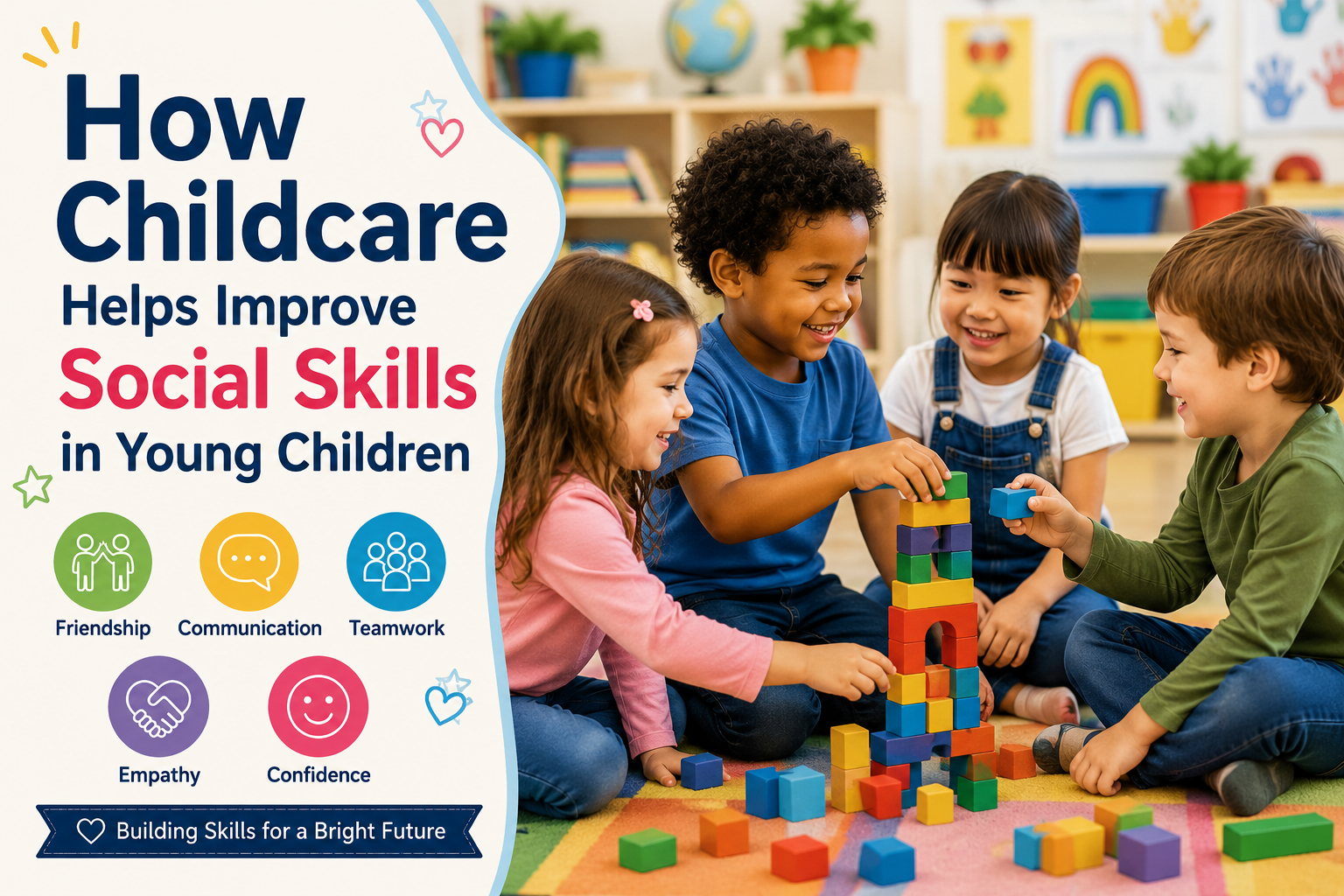
Teaches Cooperation and Teamwork
Working together is an important life skill that begins during early childhood.
Childcare programs frequently include group activities where children work toward a common goal.
Examples include:
- Building block structures
- Team games
- Classroom projects
- Group art activities
- Cleaning up together
These experiences teach children how to:
- Listen to others
- Contribute ideas
- Follow directions
- Support peers
Children begin understanding that teamwork often helps achieve better results than working alone.
Helps Children Understand Emotions
Social growth is closely connected to emotional development. Children need to understand both their own feelings and the emotions of others.
Quality childcare programs help children recognize emotions through:
- Stories
- Role-playing activities
- Classroom discussions
- Teacher guidance
Children gradually learn to identify feelings such as:
- Happiness
- Sadness
- Excitement
- Frustration
- Anger
- Fear
Learning emotional awareness helps children respond more appropriately in social situations.
For example, children may begin recognizing when a friend feels sad and offer comfort or support.
Builds Empathy and Kindness
Empathy is the ability to understand and care about another person’s feelings. Young children are still developing this skill, and childcare environments offer many opportunities to practice it.
Children may learn empathy through experiences such as:
- Helping classmates
- Comforting upset friends
- Participating in cooperative activities
- Listening to stories about emotions
Teachers often model kind behavior and encourage children to treat others with respect.
Simple actions such as sharing toys, helping clean up, or including others in play can strengthen compassionate behavior.
Developing empathy at an early age often leads to healthier relationships later in life.
Helps Children Learn Conflict Resolution
Disagreements are a normal part of childhood. Young children may argue over toys, activities, or personal preferences.
Instead of avoiding conflict, quality childcare programs use these situations as learning opportunities.
Teachers help children learn how to:
- Express feelings calmly
- Listen to others
- Find solutions
- Apologize when necessary
- Respect differences
For example, if two children want the same toy, teachers may guide them toward taking turns or finding another solution.
These experiences teach children that problems can be resolved respectfully and peacefully.
Develops Independence and Confidence
Social interaction can also improve confidence and independence.
As children become comfortable participating in childcare activities, they often begin:
- Making choices independently
- Speaking for themselves
- Trying new activities
- Meeting new people
- Taking initiative
Small achievements can have a major impact on self-esteem.
Children who feel confident socially are often more willing to engage in learning experiences and classroom participation.
Prepares Children for School Success
Strong social skills are an important part of school readiness.
Kindergarten and elementary classrooms require children to:
- Follow instructions
- Participate in groups
- Communicate with teachers
- Build friendships
- Work with classmates
Children who develop social skills in childcare settings often transition into school environments more comfortably.
They may experience less anxiety because they are already familiar with routines and interacting with peers.
Final Thoughts
Childcare offers much more than supervision during the day. It provides an environment where children learn essential social skills that support emotional growth, communication, and future success.
Through daily interactions, group activities, play-based learning, and teacher guidance, children learn how to build relationships, cooperate with others, and express themselves confidently.
The social skills developed during early childhood often continue influencing children throughout their lives. Investing in a quality childcare program can help children build a strong foundation for healthy relationships and long-term personal growth.