When parents search for a daycare, the word “certified” often stands out—but what does it actually mean? Is certification the same as licensing? Does it really impact the quality of care your child receives?
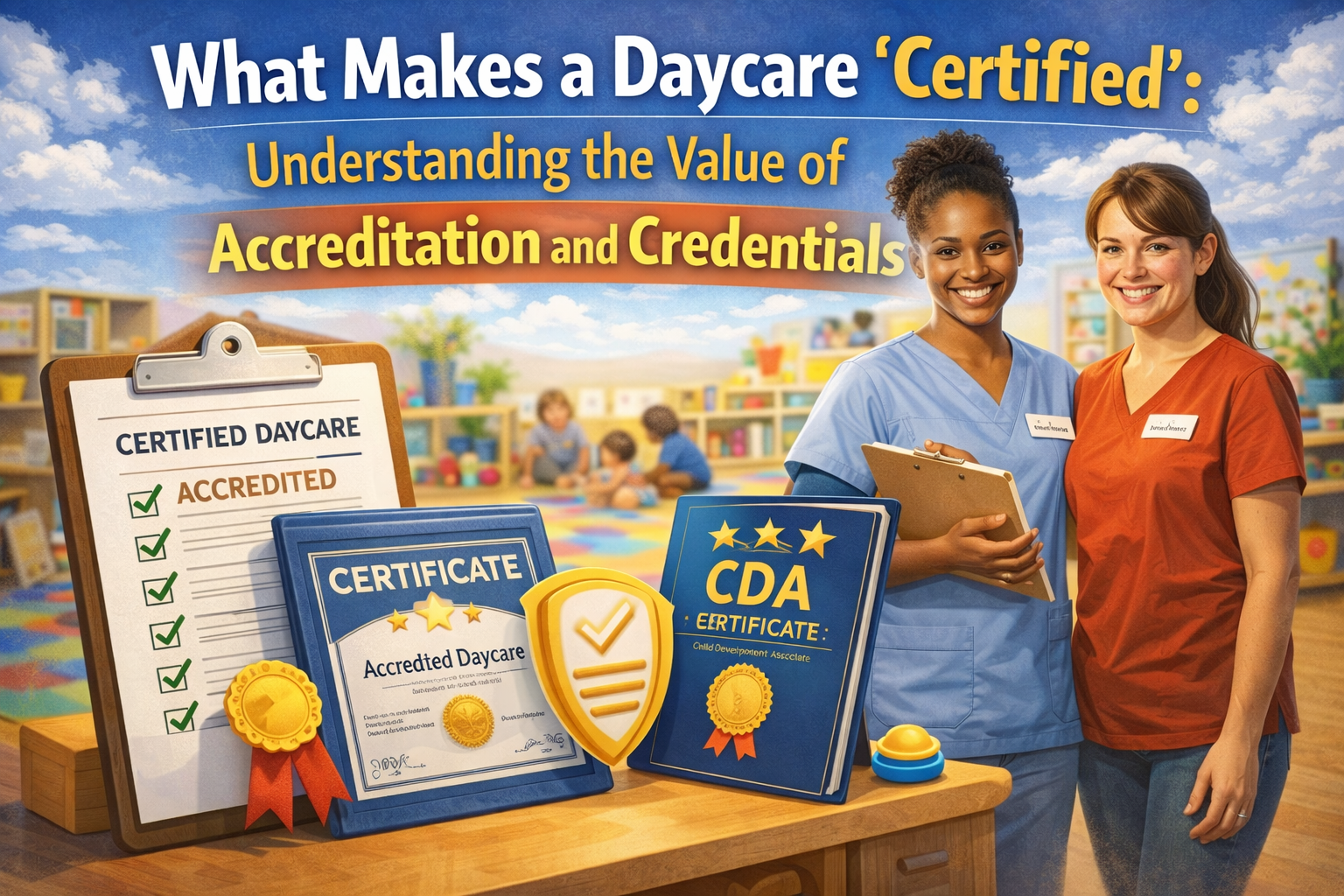
Understanding daycare certification, accreditation, and credentials is essential for making an informed childcare decision. These designations are not just labels; they represent measurable standards of safety, education, staff training, and accountability. A certified daycare has demonstrated a commitment to higher-quality care that goes beyond minimum requirements.
This article explains what makes a daycare “certified,” how certification differs from licensing, and why accreditation and credentials matter for your child’s development and safety.
What Does “Certified Daycare” Mean?
A certified daycare is a childcare center that has met recognized standards set by regulatory bodies or accreditation organizations. Certification typically requires ongoing evaluation of a center’s:
- Staff qualifications and training
- Health and safety practices
- Learning environment
- Curriculum and child development approach
- Family engagement and communication
Certification signals that a daycare has been independently reviewed and held accountable for maintaining quality standards.
Licensing vs. Certification: What’s the Difference?
Daycare Licensing (Minimum Requirement)
Licensing is required by state or local governments to legally operate a daycare.
Licensing ensures:
- Basic health and safety compliance
- Minimum staff-to-child ratios
- Background checks
- Facility standards
However, licensing is the baseline, not a marker of excellence.
Daycare Certification and Accreditation (Higher Standard)
Certification or accreditation goes beyond licensing and is often voluntary.
Certified daycares must:
- Meet stricter quality benchmarks
- Undergo regular evaluations
- Maintain higher staff training standards
- Demonstrate continuous improvement
In short, licensing allows a daycare to operate—certification proves quality.
What Accreditation Organizations Look For
Accreditation bodies evaluate multiple aspects of childcare quality. While standards vary, most focus on the following areas:
- Staff Qualifications and Professional Training
One of the strongest indicators of daycare quality is staff expertise.
Certified daycares typically require:
- Early childhood education credentials
- Ongoing professional development
- CPR and first-aid certification
- Child development and behavior training
Well-trained educators are better equipped to support learning, emotional regulation, and safety.
- Teacher-to-Child Ratios
Lower ratios are a key requirement in certified childcare programs.
Benefits include:
- More individual attention
- Better supervision
- Stronger caregiver-child relationships
- Safer learning environments
Certification ensures ratios are developmentally appropriate—not just legally acceptable.
- Health, Safety, and Security Standards
Certified daycare centers must follow enhanced safety protocols.
These often include:
- Secure entry and exit systems
- Emergency preparedness plans
- Safe sleep practices
- Strict hygiene and sanitation routines
Regular inspections ensure safety standards are consistently maintained.
- Learning Environment and Curriculum Quality
Certified daycares are evaluated on how they support child development—not just supervision.
They must demonstrate:
- Age-appropriate learning materials
- Structured yet flexible routines
- Play-based and guided learning opportunities
- Support for cognitive, social, emotional, and physical growth
This ensures children are learning in a developmentally supportive environment.
- Emotional and Social Development Practices
Accreditation standards emphasize emotional safety as much as physical safety.
Certified centers promote:
- Positive behavior guidance
- Respectful teacher-child interactions
- Emotional regulation support
- Inclusive and nurturing environments
Children thrive when they feel emotionally secure and supported.
- Family Engagement and Communication
Certified daycares recognize parents as partners.
They are often required to:
- Communicate regularly with families
- Share learning goals and progress
- Maintain transparent policies
- Encourage parent involvement
Strong family communication builds trust and consistency between home and daycare.
Why Daycare Certification Matters for Your Child
- Higher Quality Care
Certified daycares are held to higher standards across all areas of care. This results in:
- Better learning outcomes
- Safer environments
- Stronger emotional support
Quality care in early childhood has long-term benefits for academic success and well-being.
- Better School Readiness
Children who attend certified childcare programs are more likely to:
- Enter kindergarten confident and prepared
- Demonstrate strong social skills
- Follow routines and instructions
- Show curiosity and engagement in learning
Certification supports readiness—not just childcare.
- Consistency and Accountability
Certification is not a one-time achievement.
Certified daycares must:
- Maintain standards year after year
- Participate in ongoing evaluations
- Adapt to updated best practices
This accountability ensures quality does not decline over time.
- Safer Learning Environments
Certified centers take a proactive approach to safety.
Parents can expect:
- Clear emergency procedures
- Trained staff responses
- Well-maintained facilities
- Transparent incident reporting
Safety is embedded into daily operations—not treated as an afterthought.
Common Types of Daycare Credentials
While names vary by region, common credentials include:
- State quality rating systems
- National or regional accreditation
- Early childhood education certifications
- Specialized program recognitions
Each credential represents a commitment to meeting defined standards of excellence.
What Parents Should Ask About Certification
When touring a daycare, parents should ask:
- Are you licensed and certified?
- Which organization provides your accreditation?
- How often are evaluations conducted?
- What standards are required to maintain certification?
A quality daycare will welcome these questions and answer them clearly.
Red Flags to Watch For
Be cautious if a daycare:
- Avoids discussing credentials
- Cannot explain certification standards
- Relies only on licensing status
- Has outdated or expired certifications
Transparency is a key indicator of trustworthiness.
Certification and Cost: Is It Worth It?
Certified daycare programs may cost more—but the value is in what families receive:
- Higher staff quality
- Safer environments
- Stronger learning outcomes
- Peace of mind
For many families, certification is a worthwhile investment in their child’s early development.
How Certification Supports Long-Term Child Development
Research consistently shows that children who attend high-quality, accredited early learning programs benefit from:
- Better academic performance
- Improved emotional regulation
- Stronger social skills
- Greater confidence and independence
These benefits extend far beyond early childhood.
Choosing Between Certified and Non-Certified Daycare
While some non-certified daycares may still provide good care, certification offers:
- Objective quality assurance
- External accountability
- Clear standards
For parents seeking consistency and reliability, certification provides an added layer of confidence.
Final Thoughts: Certification Is a Commitment to Quality
A certified daycare is more than a label—it’s a promise. Accreditation and credentials reflect a childcare center’s dedication to safety, education, professional excellence, and continuous improvement.
When parents choose a certified daycare, they are choosing an environment where children are protected, supported, and encouraged to grow. Understanding the value of daycare certification empowers families to make informed decisions that support their child’s present and future success.