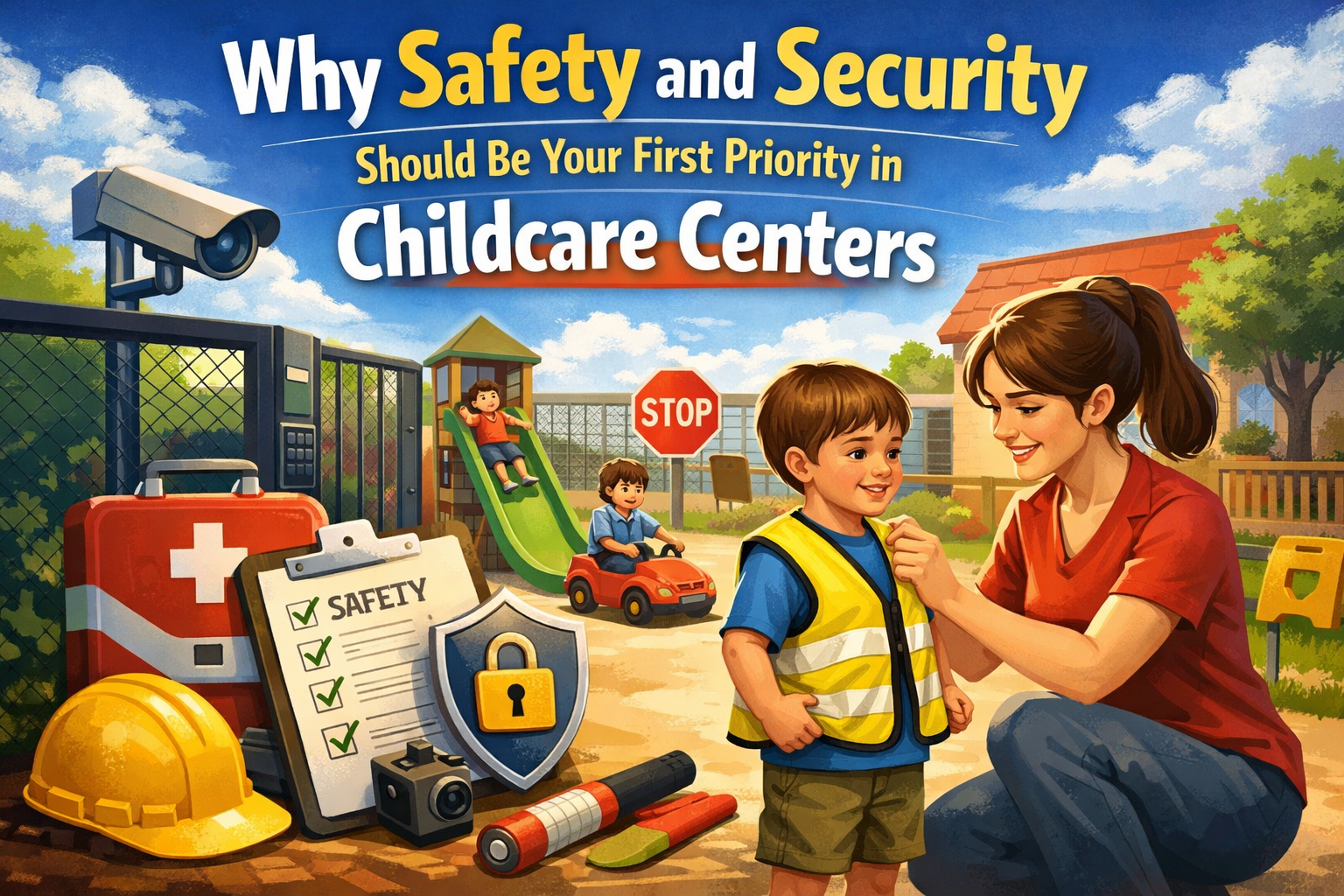
Choosing a childcare center is one of the most important decisions a parent will ever make. While curriculum, learning activities, and warm caregivers all matter, nothing is more critical than safety and security. Before a child can learn, socialize, or thrive emotionally, they must feel protected—and parents must feel confident leaving their child in someone else’s care.
Safety and security are not optional features of a childcare center; they are the foundation upon which quality care is built. From secure entrances and trained staff to daily supervision and emergency preparedness, strong safety practices protect children’s physical well-being, emotional health, and overall development.
This article explains why safety and security should always be your first priority when evaluating childcare centers and what standards every parent should expect.
Why Safety Comes Before Everything Else in Childcare
Young children are naturally curious, impulsive, and still developing judgment. This makes them more vulnerable to accidents, unsafe situations, and emotional distress without proper supervision and safeguards.
When childcare safety is prioritized:
- Children feel emotionally secure
- Parents experience peace of mind
- Learning environments remain calm and predictable
- Risks and injuries are significantly reduced
A safe environment allows children to focus on what they do best—learning, playing, and growing.
Safety vs. Security: Understanding the Difference
Although often grouped together, safety and security serve different purposes.
Safety focuses on preventing accidents and injuries within the environment.
Security focuses on controlling access and protecting children from external threats.
High-quality childcare centers address both equally.
- Secure Entry and Exit Systems Protect Children
One of the most visible indicators of a secure childcare center is controlled access.
Strong Security Measures Include:
- Locked or monitored entrances
- Authorized pick-up lists
- ID verification for visitors
- Visitor sign-in procedures
Without proper access control, even the best educational program is at risk. Secure entry systems ensure children are only released to approved adults and that unauthorized individuals cannot enter learning areas.
- Constant Supervision Is Non-Negotiable
Active supervision is the backbone of childcare safety.
Children should never be left unattended—whether in classrooms, playgrounds, hallways, or restrooms.
Proper Supervision Includes:
- Age-appropriate teacher-to-child ratios
- Staff positioned for full visibility
- Active engagement rather than passive monitoring
Consistent supervision prevents accidents, resolves conflicts early, and ensures children’s needs are met promptly.
- Trained and Qualified Staff Make the Difference
No safety system works without trained people implementing it.
Quality childcare centers ensure staff members:
- Pass background checks
- Are trained in child development
- Hold CPR and first-aid certification
- Receive ongoing safety training
Well-trained staff can recognize hazards, respond quickly to emergencies, and provide calm reassurance during stressful situations.
- Emergency Preparedness Saves Lives
Emergencies can happen anywhere—and childcare centers must be prepared.
Parents Should Expect:
- Written emergency procedures
- Regular fire, evacuation, and lockdown drills
- Staff trained to respond calmly and efficiently
- Clear communication plans for families
Preparedness reduces panic and ensures children are protected even in unexpected situations.
- Cleanliness and Hygiene Protect Children’s Health
Health safety is just as important as physical security.
Young children are more susceptible to illness, making hygiene protocols essential.
Strong Health Safety Practices Include:
- Regular handwashing routines
- Frequent sanitization of toys and surfaces
- Safe diaper-changing procedures
- Clear illness exclusion policies
Clean environments reduce the spread of infections and keep children healthy and comfortable.
- Childproofed and Well-Maintained Facilities Reduce Risk
Safe childcare environments are intentionally designed for children.
Key safety features include:
- Covered electrical outlets
- Secured furniture and shelves
- Non-toxic materials
- Safe flooring and play surfaces
Routine facility inspections and maintenance prevent hazards before they cause harm.
- Playground Safety Is Just as Important as Classroom Safety
Outdoor play supports physical and cognitive development—but it must be safe.
Parents should look for:
- Fenced play areas
- Age-appropriate equipment
- Shock-absorbing ground surfaces
- Constant adult supervision
A well-maintained playground allows children to explore safely without unnecessary risk.
- Safe Sleep Practices Protect the Youngest Children
For infants and toddlers, sleep safety is critical.
Safe childcare centers follow guidelines such as:
- Babies placed on their backs to sleep
- Cribs free of loose bedding or toys
- Individual sleep spaces
- Ongoing supervision during rest periods
These practices significantly reduce risks and promote healthy rest.
- Emotional Safety Is Part of Overall Security
Safety is not only physical—it is emotional.
Children must feel:
- Respected
- Comforted
- Heard
- Protected from fear or humiliation
Positive behavior guidance, calm communication, and supportive caregiving create emotionally secure environments where children feel safe to express themselves.
- Clear Policies Create Consistency and Accountability
A secure childcare center operates with clear, written policies.
These policies should cover:
- Safety and emergency procedures
- Behavior guidance
- Health and hygiene standards
- Pick-up and drop-off rules
Consistency ensures all staff follow the same safety standards at all times.
Why Safety Directly Impacts Learning and Development
Children cannot learn effectively if they feel unsafe.
When safety and security are prioritized:
- Stress levels decrease
- Focus and engagement improve
- Emotional regulation strengthens
- Social interactions become more positive
Safe environments support cognitive growth, emotional resilience, and healthy development.
How Safety Builds Parent Trust
Trust is essential in childcare relationships.
When parents see strong safety measures, they feel:
- Confident leaving their child
- Comfortable communicating concerns
- Secure in their childcare choice
Transparent safety practices build long-term trust between families and childcare providers.
Common Safety Red Flags Parents Should Never Ignore
During a childcare tour, parents should be cautious if they notice:
- Unlocked or unsecured entrances
- Overcrowded classrooms
- Poor supervision
- Vague answers about emergency procedures
- Lack of cleanliness or organization
If a center is unwilling to discuss safety openly, it’s a sign to look elsewhere.
Questions Parents Should Ask About Safety and Security
To evaluate childcare safety, parents should ask:
- How is access to the building controlled?
- What training do staff receive for emergencies?
- How are incidents reported to parents?
- What are the illness and medication policies?
Quality centers welcome these questions and answer them confidently.
Why Safety Must Come Before Curriculum
Academic programs and enrichment activities are meaningless if children are not safe.
A center may offer:
- Advanced learning materials
- Impressive classrooms
- Structured lesson plans
But without strong safety and security, these features lose their value. Safety is the baseline—not a bonus.
Safety and Security as a Long-Term Investment
Childcare safety doesn’t just protect children today—it shapes their future.
Children who grow up in safe, predictable environments are more likely to:
- Develop confidence
- Build trust in adults
- Take healthy learning risks
- Adapt well to school environments
Safety supports lifelong emotional and academic success.
How Parents Can Advocate for Safer Childcare
Parents play a vital role in maintaining safety standards by:
- Asking informed questions
- Observing daily practices
- Communicating concerns
- Partnering with caregivers
When families and childcare centers work together, children benefit the most.
Final Thoughts: Safety Is the Foundation of Quality Childcare
No feature of a childcare center matters more than safety and security. Secure entrances, trained staff, constant supervision, clean facilities, and emergency preparedness are not optional—they are essential.
When safety is prioritized, children feel protected, parents feel confident, and learning can truly flourish. Before considering curriculum, convenience, or cost, parents should always ask one critical question:
Is my child safe here?
Because in childcare, safety is not just the first priority—it’s the foundation of everything else.