
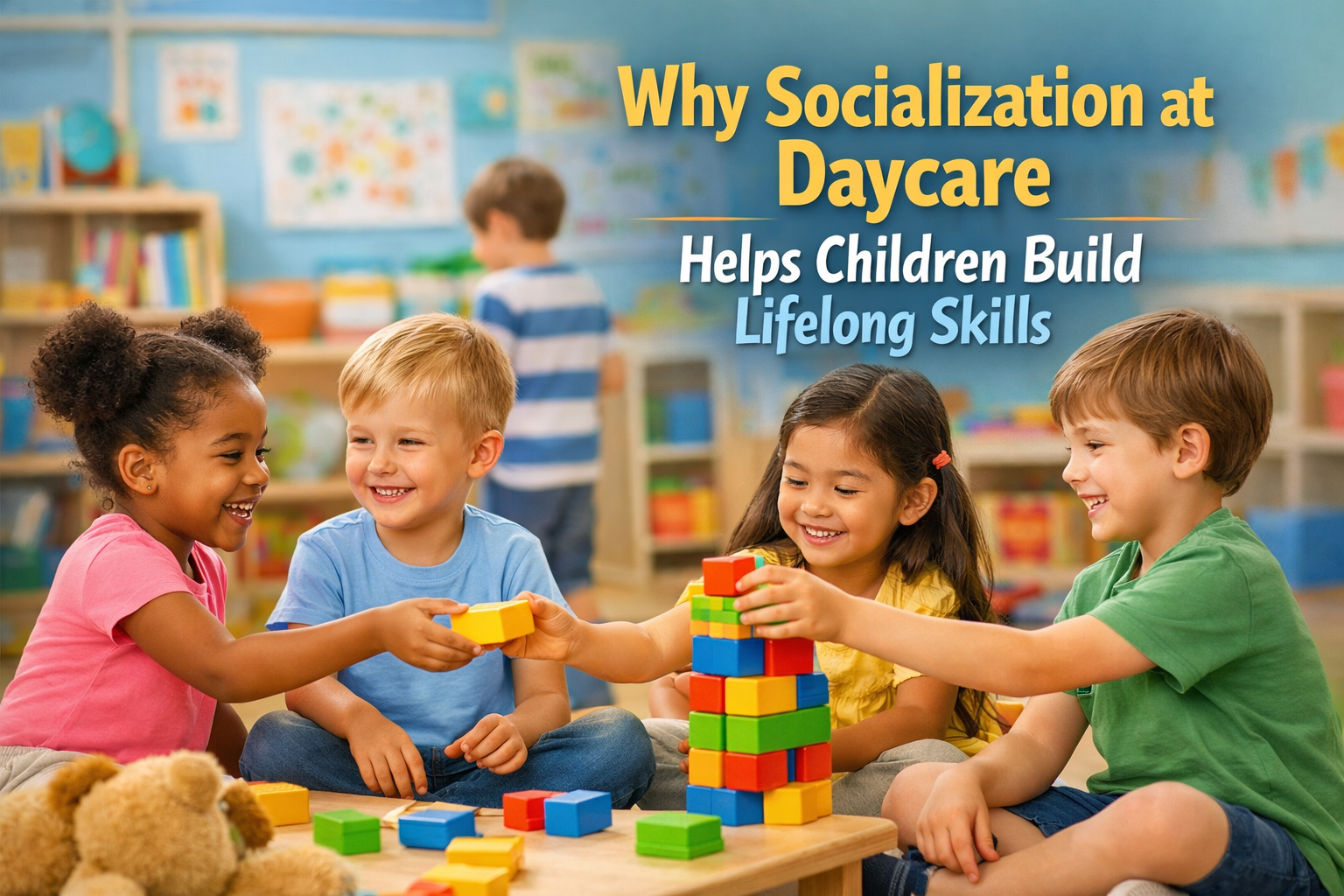
Social skills don’t develop in isolation—they grow through daily interaction, shared experiences, and guided practice. For young children, daycare is often the first environment outside the home where they regularly engage with peers. These interactions play a critical role in shaping how children communicate, cooperate, and build relationships throughout their lives.
Daycare socialization is far more than casual playtime. It is a structured yet natural setting where children learn essential life skills such as empathy, teamwork, emotional regulation, and conflict resolution. This article explores why socialization at daycare is a cornerstone of early development and how it helps children build skills that last well beyond childhood.
Understanding Socialization in Early Childhood
Socialization is the process by which children learn to interact with others and understand social norms. In early childhood, this includes learning how to:
- Share and take turns
- Communicate needs and emotions
- Follow group rules
- Build friendships
- Resolve disagreements
While families lay the foundation for social development, daycare environments provide consistent opportunities for children to practice these skills with peers in real-life situations.
Why Daycare Is Ideal for Social Skill Development
Daycare offers daily, age-appropriate social experiences that are difficult to replicate in one-on-one home settings. Children interact with peers of similar ages, guided by trained caregivers who model and reinforce positive behavior.
Through daycare socialization, children experience:
- Group play
- Collaborative activities
- Structured routines
- Guided peer interaction
These experiences help children understand how to function within a community—an essential life skill.
- Learning Cooperation and Teamwork
One of the first social lessons children learn at daycare is how to cooperate with others.
How Daycare Encourages Cooperation:
- Group games that require turn-taking
- Shared materials and toys
- Collaborative art and building projects
Children learn that working together often leads to better outcomes than playing alone. These early lessons in teamwork build the foundation for future success in school, sports, and group environments.
- Developing Empathy and Emotional Awareness
Empathy—the ability to understand and care about others’ feelings—is a key lifelong skill that begins in early childhood.
At daycare, children:
- Observe peers experiencing emotions
- Learn to comfort others who are upset
- Recognize facial expressions and body language
- Understand how their actions affect others
Caregivers help children name emotions and respond appropriately, strengthening emotional intelligence and compassion.
- Building Communication Skills
Social interaction naturally encourages communication. At daycare, children constantly use language to:
- Ask for help
- Express needs
- Negotiate play roles
- Share ideas
These daily interactions strengthen vocabulary, listening skills, and expressive language. Children become more confident communicators as they learn how to interact effectively with peers and adults.
- Practicing Conflict Resolution
Disagreements are a normal part of early childhood—and they are valuable learning opportunities.
Daycare provides a safe, guided environment where children learn to:
- Express frustration with words
- Listen to others’ perspectives
- Find compromises
- Resolve conflicts peacefully
Rather than avoiding conflict, children learn how to manage it constructively. These skills are essential for healthy relationships throughout life.
- Encouraging Independence and Confidence
Socialization at daycare helps children develop a sense of independence.
By interacting with peers and caregivers, children learn to:
- Make choices
- Solve small problems on their own
- Advocate for themselves
- Feel confident in group settings
This independence builds self-esteem and prepares children for future transitions, such as preschool and elementary school.
- Understanding Social Rules and Boundaries
Group environments help children learn social norms that guide behavior.
At daycare, children practice:
- Waiting their turn
- Respecting personal space
- Following group routines
- Understanding expectations
These experiences teach children how to function within structured environments—an essential skill for academic and social success.
- Building Friendships and Social Bonds
Early friendships play an important role in emotional development.
Through repeated interactions, children:
- Form attachments to peers
- Learn loyalty and trust
- Experience joy in shared play
- Develop a sense of belonging
These early social bonds help children feel connected and emotionally secure.
- Supporting Emotional Regulation
Managing emotions is a learned skill, and daycare offers daily opportunities to practice it.
Children learn to:
- Cope with frustration
- Handle disappointment
- Calm themselves after excitement
- Respond appropriately to others’ emotions
With guidance from caregivers, children gradually develop self-regulation skills that support emotional well-being.
- Exposure to Diverse Personalities and Backgrounds
Daycare environments often bring together children from diverse families and cultures.
This exposure helps children:
- Appreciate differences
- Develop inclusivity
- Adapt to various social styles
- Build flexibility in relationships
Early exposure to diversity fosters open-mindedness and respect—qualities that benefit children throughout life.
- Preparing Children for School and Beyond
Strong social skills are closely linked to school readiness.
Children who experience daycare socialization often enter school better prepared to:
- Participate in group learning
- Follow classroom routines
- Collaborate with classmates
- Communicate with teachers
These skills support not only academic success but also positive school experiences.
How Caregivers Support Social Development at Daycare
Trained caregivers play a vital role in guiding social interactions.
They support children by:
- Modeling respectful behavior
- Encouraging positive interactions
- Helping children express emotions
- Teaching problem-solving strategies
This guidance ensures that social learning is intentional, supportive, and developmentally appropriate.
Socialization Benefits for Different Age Groups
Infants
- Learn trust and comfort with others
- Respond to facial expressions and voices
Toddlers
- Practice sharing and turn-taking
- Begin expressing emotions verbally
Preschoolers
- Build friendships
- Solve conflicts more independently
- Develop empathy and cooperation
Each stage of daycare socialization builds upon the last, supporting continuous social growth.
Addressing Common Parental Concerns
Some parents worry that daycare socialization may be overwhelming for young children. In reality, high-quality daycare programs introduce social interaction gradually and thoughtfully.
Caregivers:
- Respect individual temperaments
- Support shy or sensitive children
- Provide comfort and reassurance
- Encourage participation at a child’s pace
This balanced approach helps every child feel safe and supported.
Long-Term Impact of Early Socialization
The skills learned through daycare socialization extend into adolescence and adulthood.
Children who develop strong social skills early are more likely to:
- Build healthy relationships
- Communicate effectively
- Resolve conflicts calmly
- Adapt to new environments
These abilities support success not only in school, but in careers and personal relationships later in life.
Supporting Social Skills at Home
Parents can reinforce daycare socialization by:
- Encouraging playdates
- Talking about emotions
- Modeling respectful communication
- Supporting cooperative play
Consistency between home and daycare strengthens social development.
Final Thoughts: Social Skills That Last a Lifetime
Socialization at daycare is a powerful contributor to early development. Through daily peer interaction, children learn cooperation, empathy, communication, and conflict resolution—skills that shape their relationships for life.
Far from being “just play,” daycare socialization is an essential learning experience that helps children grow into confident, compassionate, and capable individuals. By supporting social development early, parents and caregivers give children one of the greatest gifts: the ability to connect meaningfully with others.